



















Thông báo

CẢM ƠN QUÝ KHÁCH ĐÃ ĐẶT LỊCH KHÁM TẠI AIH.
Quý khách có muốn đăng ký thông tin trước không?
Vui lòng điền vào thông tin bên dưới
Khẩn cấp
REGAINING SHOULDER FUNCTION AFTER REVERSE TOTAL SHOULDER ARTHROPLASTY AT AIH
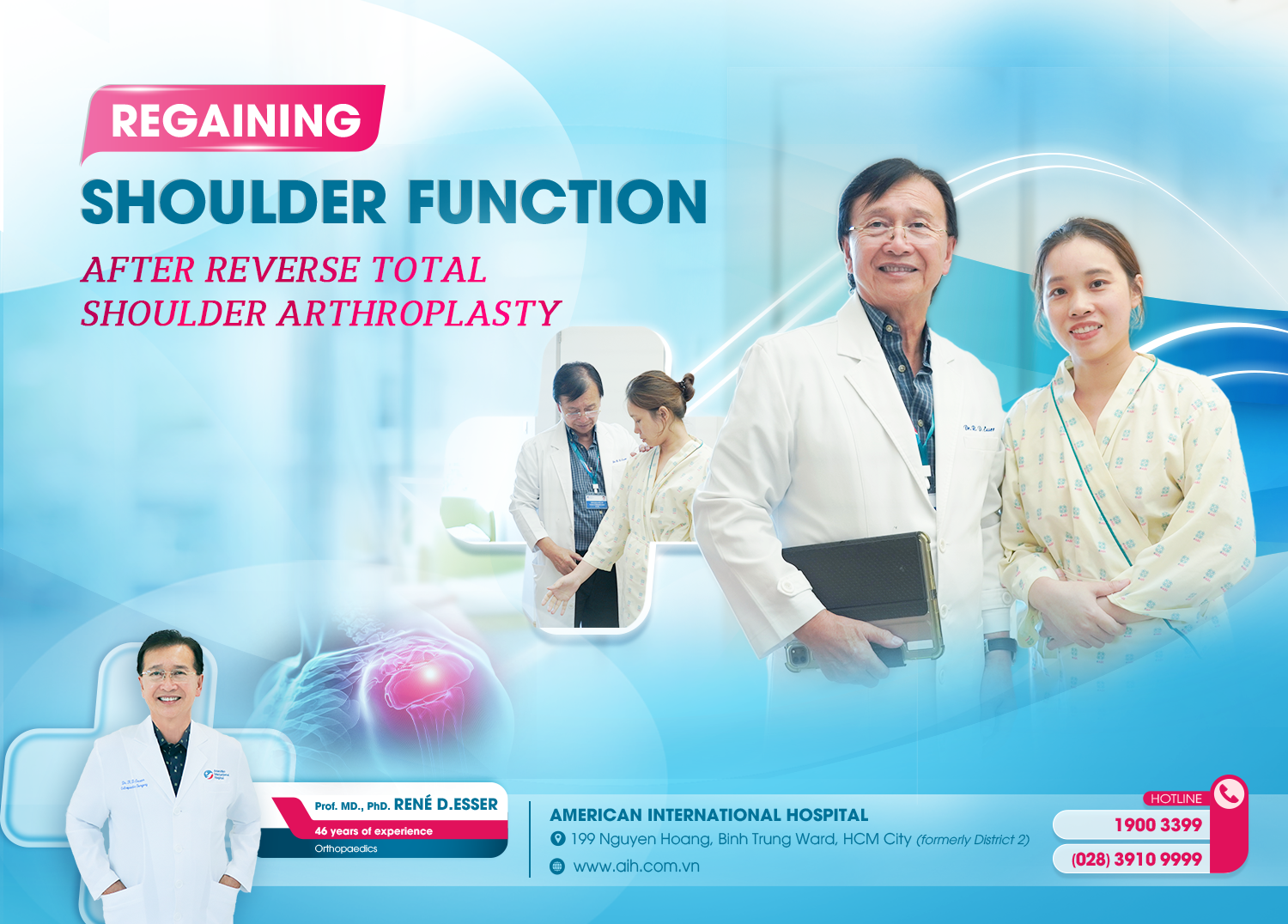
Despite undergoing two surgeries to treat a humeral fracture following a traffic accident, Ms. Tuyet Suong (34 years old, Quang Nam Province) continued to suffer from severe shoulder pain, stiffness, and an inability to perform simple daily activities such as washing her hair or writing on a whiteboard.
After undergoing reverse total shoulder arthroplasty at American International Hospital (AIH), she experienced significant pain relief, regained comprehensive shoulder function, and has gradually returned to both her teaching career and everyday life.
Two Surgeries, Yet the Shoulder Remained Stiff
Two years ago, Ms. Suong was involved in a traffic accident and sustained a proximal humerus fracture of her right arm—a complex injury affecting the shoulder joint. She subsequently underwent two osteosyntheses at a provincial hospital.
However, the surgeries failed to completely relieve her shoulder pain. Her shoulder became almost immobile, and she could only raise her arm to shoulder level. According to Ms. Suong, even simple tasks such as washing her hair, reaching up to write on a whiteboard, or brushing her hair became extremely challenging.

Throughout this period, she persevered through the pain while participating in rehabilitation exercises, hoping her shoulder function would gradually improve. Instead, the stiffness progressively worsened, her range of motion continued to decline, and the shoulder eventually lost virtually all flexibility.
Shoulder Hemiarthroplasty in the Early Stage
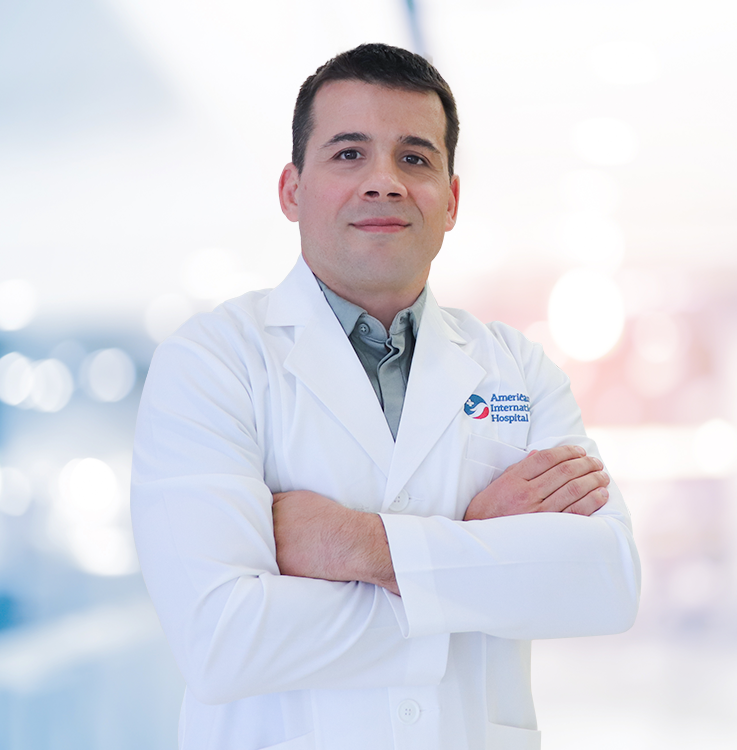
During her initial consultation with Prof. Dr. René D. Esser, he found that her shoulder joint had sustained extensive damage as a result of both the original trauma and the previous surgical interventions.
According to Prof. Dr. René D. Esser, the patient's peri-shoulder musculotendinous structures, particularly the rotator cuff, had retained partial function. Therefore, the optimal treatment at that stage was shoulder hemiarthroplasty, which would preserve as much of the patient's native shoulder anatomy as possible.
Following the procedure, the patient experienced significant pain relief, improved range of motion, and better shoulder mobility. About a year later, however, she returned for follow-up after noticing that her shoulder had gradually become stiff again, with a progressive decline in range of motion.
Reverse Total Shoulder Arthroplasty for Rotator Cuff Dysfunction
After evaluating the patient's condition, Prof. Dr. René D. Esser determined that her rotator cuff was no longer capable of adequately supporting shoulder movement.
Given these findings, the doctor and his surgical team recommended reverse total shoulder arthroplasty, an advanced surgical technique designed for patients with severe shoulder joint damage accompanied by rotator cuff dysfunction.
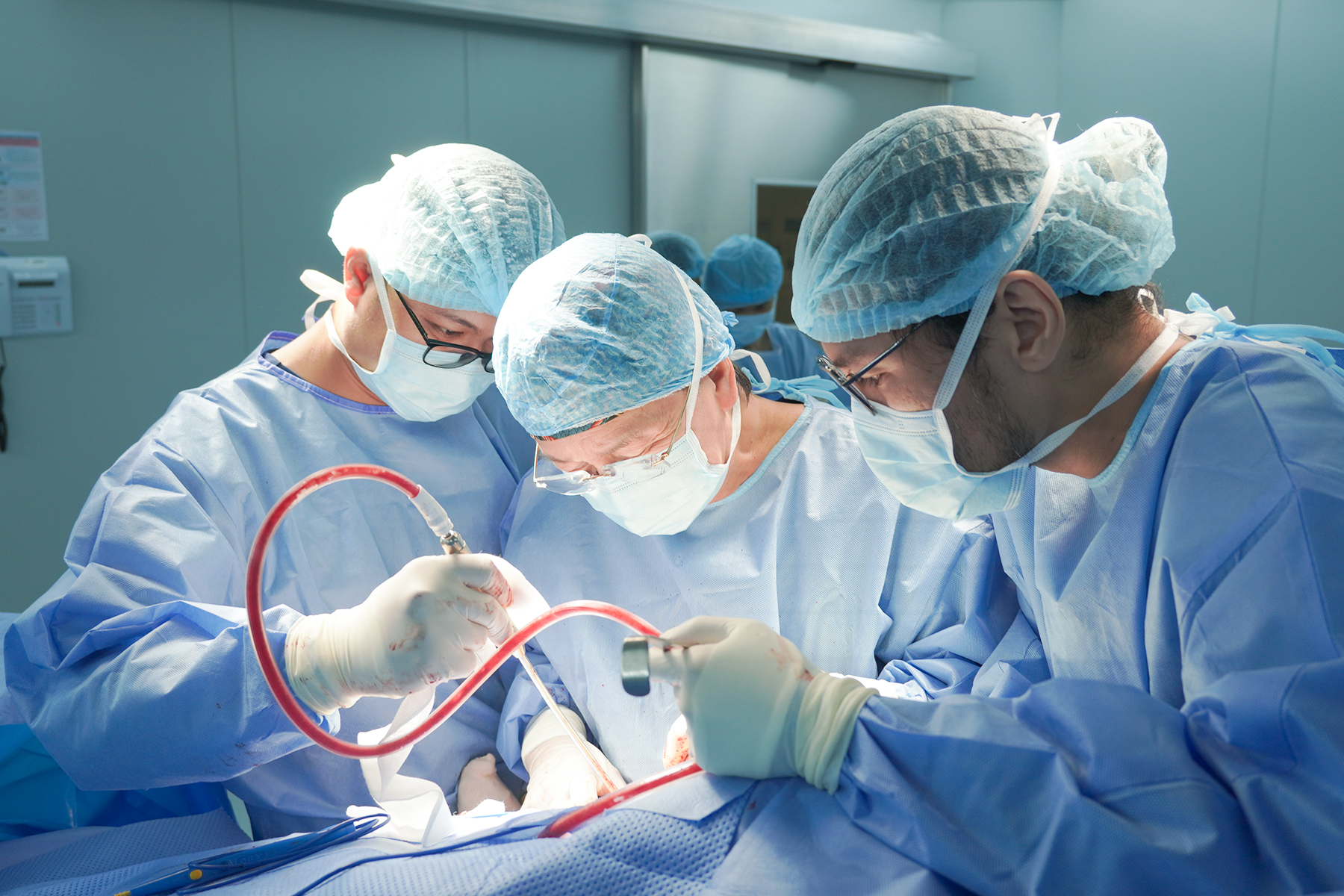
Explaining the procedure, Prof. Dr. René D. Esser said: "A healthy shoulder joint functions through the coordinated interaction of the humeral head, the glenoid cavity, and the rotator cuff muscles and tendons. When the rotator cuff is irreparably damaged, patients often lose the ability to raise their arm, even if the bony structures have been repaired. Reverse shoulder arthroplasty changes the biomechanics of the shoulder by shifting the primary lifting function from the rotator cuff to the deltoid muscle. This enables patients to regain the ability to lift and move their arm while providing substantial pain relief."
Reverse total shoulder arthroplasty is a technically demanding procedure that requires extensive expertise in patient evaluation, indication, and precise execution to achieve optimal outcomes.
Early Recovery with a Physical Therapy Program
In addition to the success of the surgery, a rehabilitation program played a vital role in helping the patient regain shoulder range of motion and optimize overall shoulder function.
Just five days after surgery, Ms. Suong began a physical therapy program under the guidance of a physiotherapist. The rehabilitation exercises were designed and progressively adjusted at each stage of recovery to gradually increase the shoulder's range of motion, improve muscle strength, and help the joint adapt to its new biomechanics.
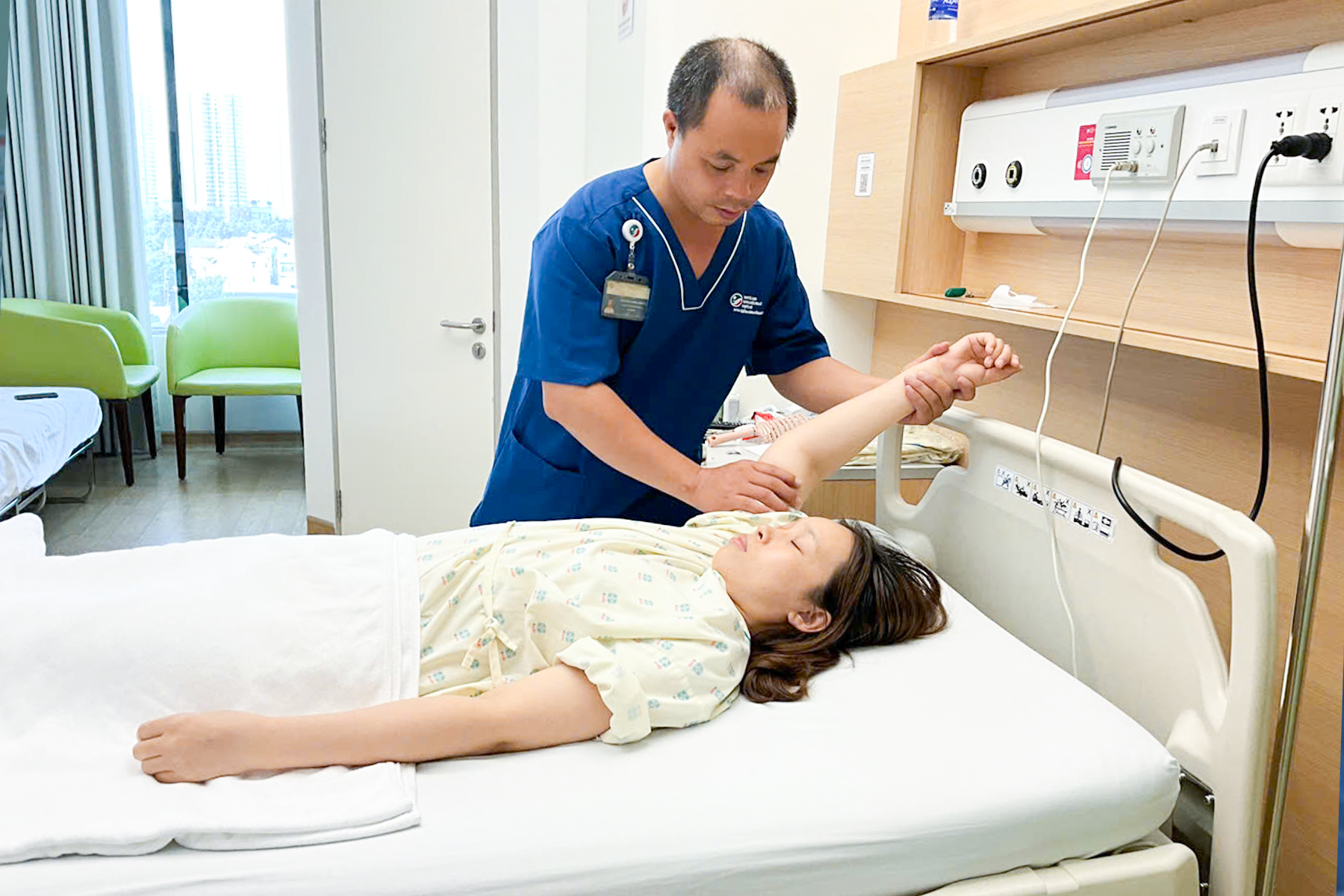
Reflecting on her recovery during her hospital stay at AIH, Ms. Suong shared: "From the very first days after surgery, I noticed a remarkable difference compared with my previous two operations. My shoulder felt much more mobile, my movements were easier, and the pain was gone. With each day of physical therapy, I could clearly feel my range of motion improving."
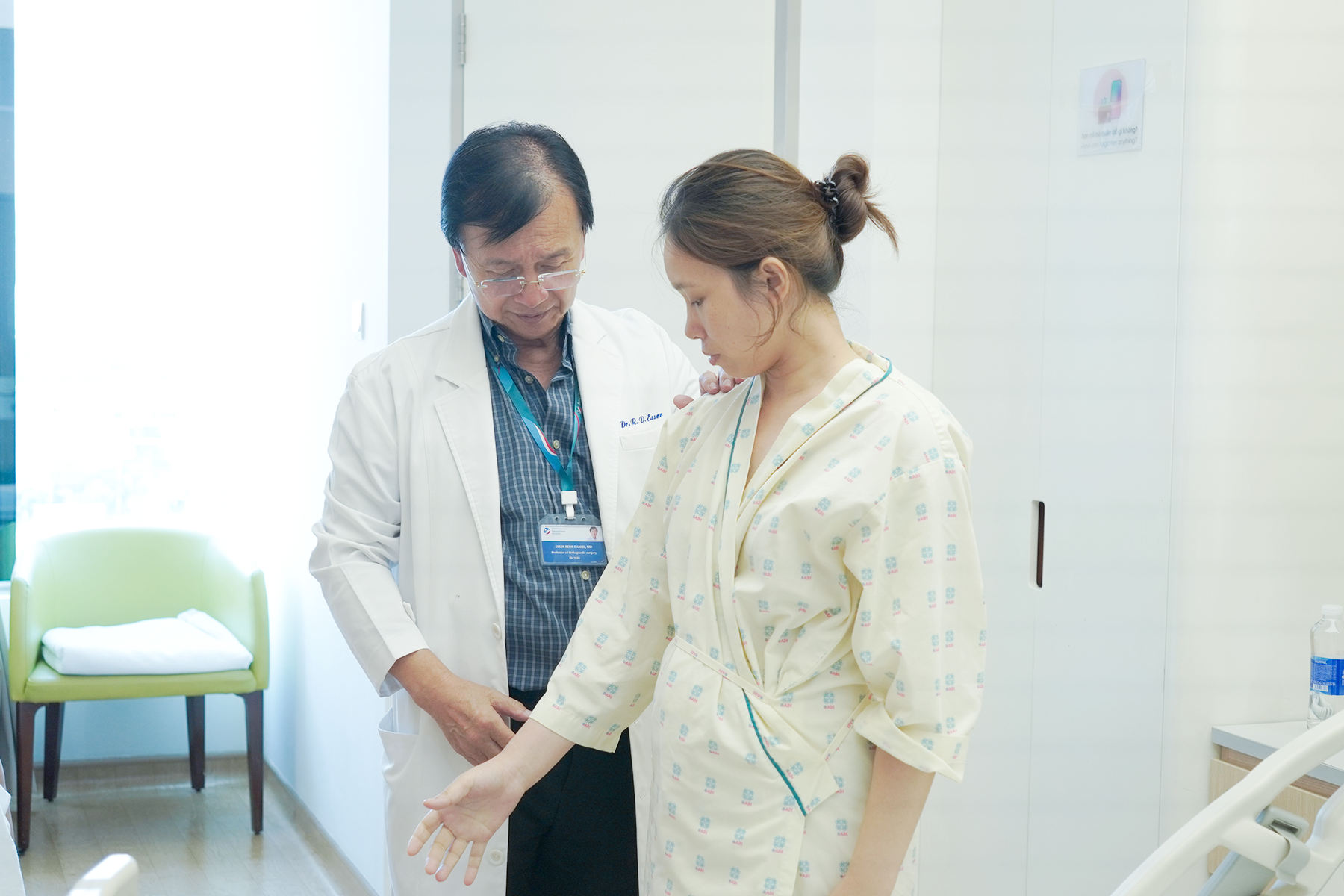
Today, Ms. Suong is able to move her shoulder with ease, perform daily activities much more comfortably, and no longer suffers from the persistent pain.
SHOULDER REPLACEMENT SURGERY: AN ADVANCED PROCEDURE REQUIRING APPROPRIATE INDICATION AND SURGICAL EXPERTISE
The shoulder has the greatest range of motion of any joint in the human body and is also one of the most anatomically complex, relying on the coordinated function of bones, cartilage, tendons, muscles, ligaments, and the nervous system.
Shoulder replacement surgery involves more than simply replacing damaged joint surfaces. Its goal is to restore the biomechanical balance of the entire shoulder joint, enabling patients to regain natural and long-lasting function.
According to Professor René D. Esser, the decision between hemiarthroplasty and reverse total shoulder arthroplasty should be based on a comprehensive evaluation of each patient's bone quality, extent of articular cartilage damage, rotator cuff integrity, age, functional demands, and treatment expectations.
At American International Hospital (AIH), every patient receives an individualized treatment strategy. In addition to utilizing advanced shoulder replacement techniques, AIH implements an early rehabilitation program designed to relieve pain, restore range of motion, and facilitate a timely return to daily activities.
After years of living with chronic pain and shoulder stiffness, Ms. Suong has gradually regained shoulder function and renewed confidence in her daily life. Her case demonstrates the effectiveness of a personalized treatment approach, in which accurate clinical assessment, appropriate procedure selection, and a structured rehabilitation program are all essential to achieving successful outcomes, even in patients with complex shoulder pathology.
--------------------

Để lại bình luận